
Stargazing under dark Montana skies
Light pollution maps put the skies around Lincoln at about a Bortle 2, with very little artificial light compared with most places people camp.
Stargazing
With very little artificial light around Lincoln, the night sky here is something special. On a clear, moonless night, the Milky Way stretches from one side of the sky to the other, and you’ll see more stars than most people have seen in years.
Many of our guests tell us the night sky was a highlight of their trip. Some bring telescopes and cameras, and others just pull a chair away from the campfire and look up.
Local tips from Matt and Nichole, owners of Lost Moose Meadows.
Quick facts
- Sky darkness
- About Bortle 2 on light pollution maps
- Best time
- Clear nights near the new moon
- Milky Way season
- June through September
- Big shower
- Perseids, mid August
- Bring
- Red light and a warm layer
What a Bortle 2 sky looks like
The Bortle scale rates how dark the night sky is, from 1 (as dark as it gets) to 9 (a bright city sky). Most suburbs are around a 5 or 6. Under true Bortle 2 conditions, the Milky Way can be bright enough to cast a faint shadow, and distant galaxies and nebulas become much easier to see.
The closest city, Helena, is about an hour away, and the mountains around the valley block most of what little glow there is.
What you can see
- The Milky Way. The bright center of our galaxy rises in the south during summer nights. It’s best from June through September, especially late in the evening.
- The Andromeda Galaxy. In late summer and fall you can spot it with your naked eye as a faint smudge of light. It’s about 2.5 million light years away.
- Planets. Bright planets like Jupiter and Saturn are easy to find, and binoculars will show Jupiter’s moons.
- Satellites and the space station. On most clear evenings you’ll see satellites drifting across the sky. There are free apps that tell you when the space station will pass over.
Meteor showers during our season
Lyrids
Around April 22An early season shower with a handful of bright meteors per hour. A nice reward for our first guests of the year.
Perseids
Peaks around August 12The best shower of the year, with dozens of meteors per hour on a dark night. Warm August evenings make it easy to stay up.
Draconids
Around October 8A small shower that’s best in the early evening, a nice send off before we close for the season. Bundle up, since October nights are cold.
Northern lights
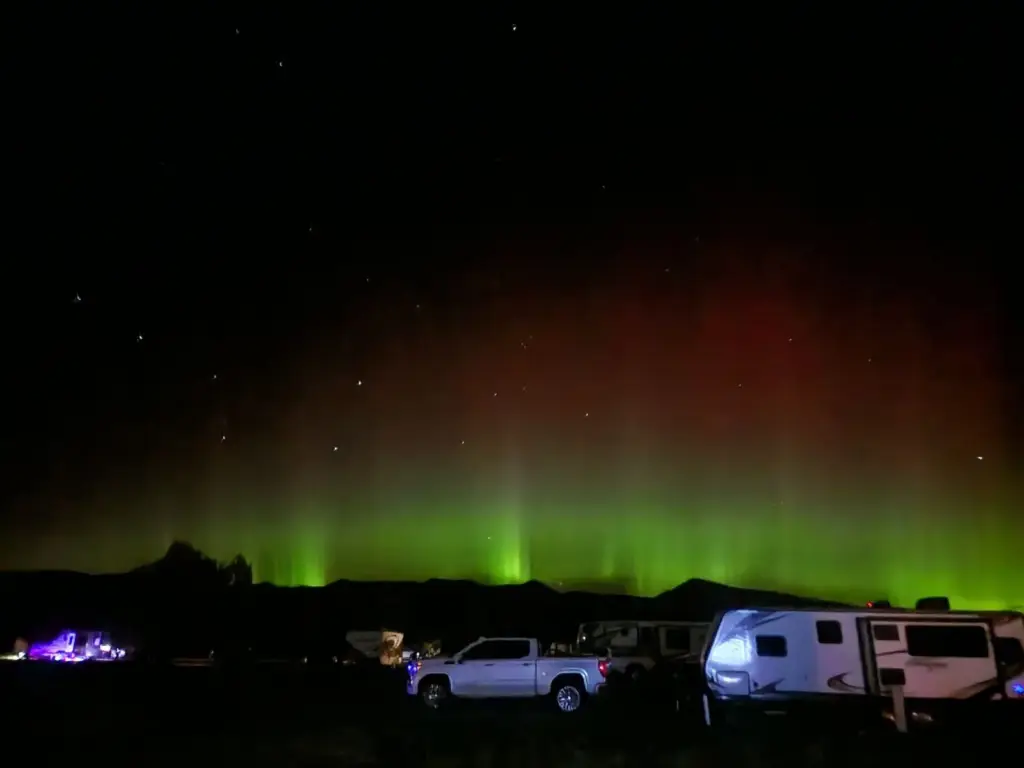
We’ve even been lucky enough to see the northern lights from the campground. They’re never guaranteed, but when the forecast looks good, it’s worth staying up for. Check the aurora forecast from NOAA’s Space Weather Prediction Center, look to the north, and give your eyes time to adjust. A phone camera will often pick up colors your eyes can barely see.
Tips for a good night
- Watch the moon. The week around a new moon is best. A full moon lights up the whole campground. Once you have your dates, see seasonal rates for that time of year.
- Give your eyes 20 minutes to adjust, and use a red light instead of a white flashlight.
- Be mindful of your neighbors. Keeping outdoor lights low after dark helps everyone enjoy the sky.
- Bring a jacket. Even in July, evenings cool off quickly after dark at 4,560 feet.
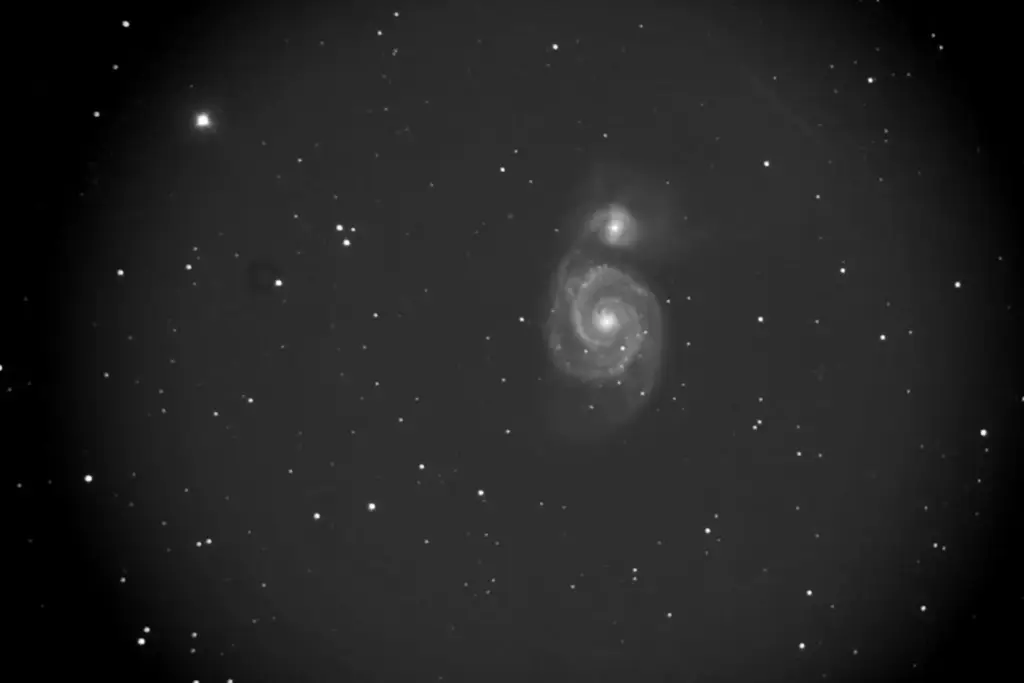
- Try astrophotography. The Whirlpool Galaxy photo on this page was taken by a guest right from their site. We’d love to see yours.
Keep exploring
More to see and do
Open April 15 to October 15
Dark skies are waiting.
Book a few nights and plan one around the new moon.